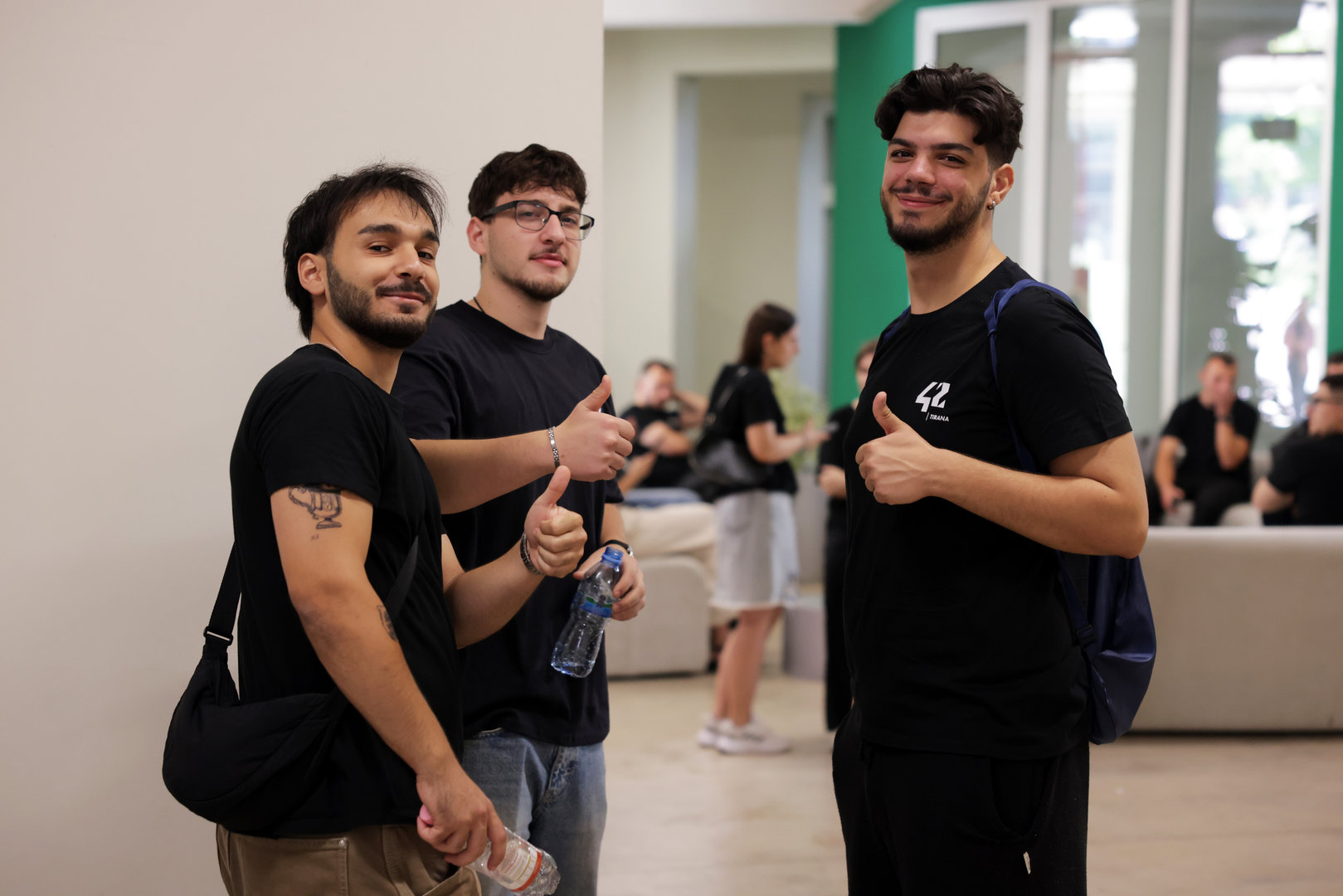
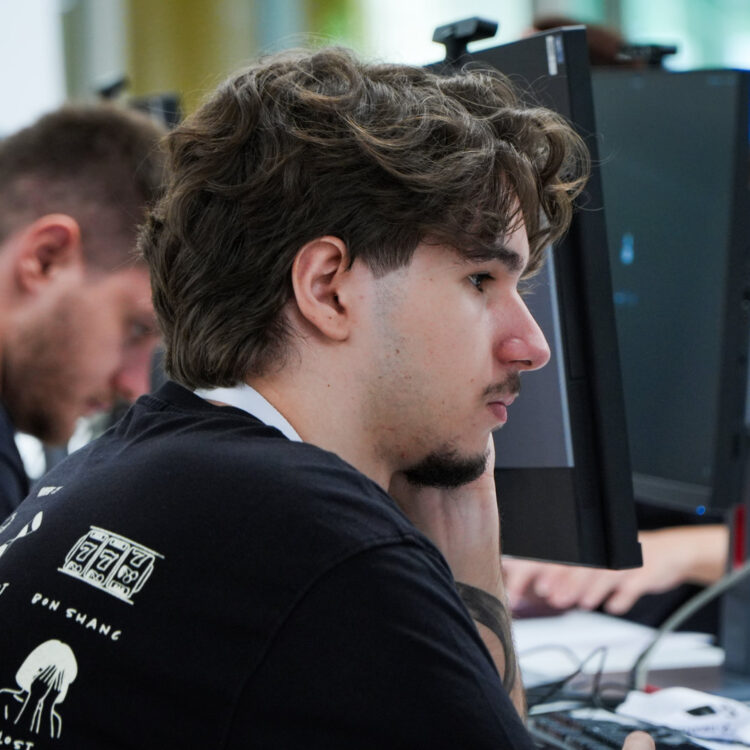
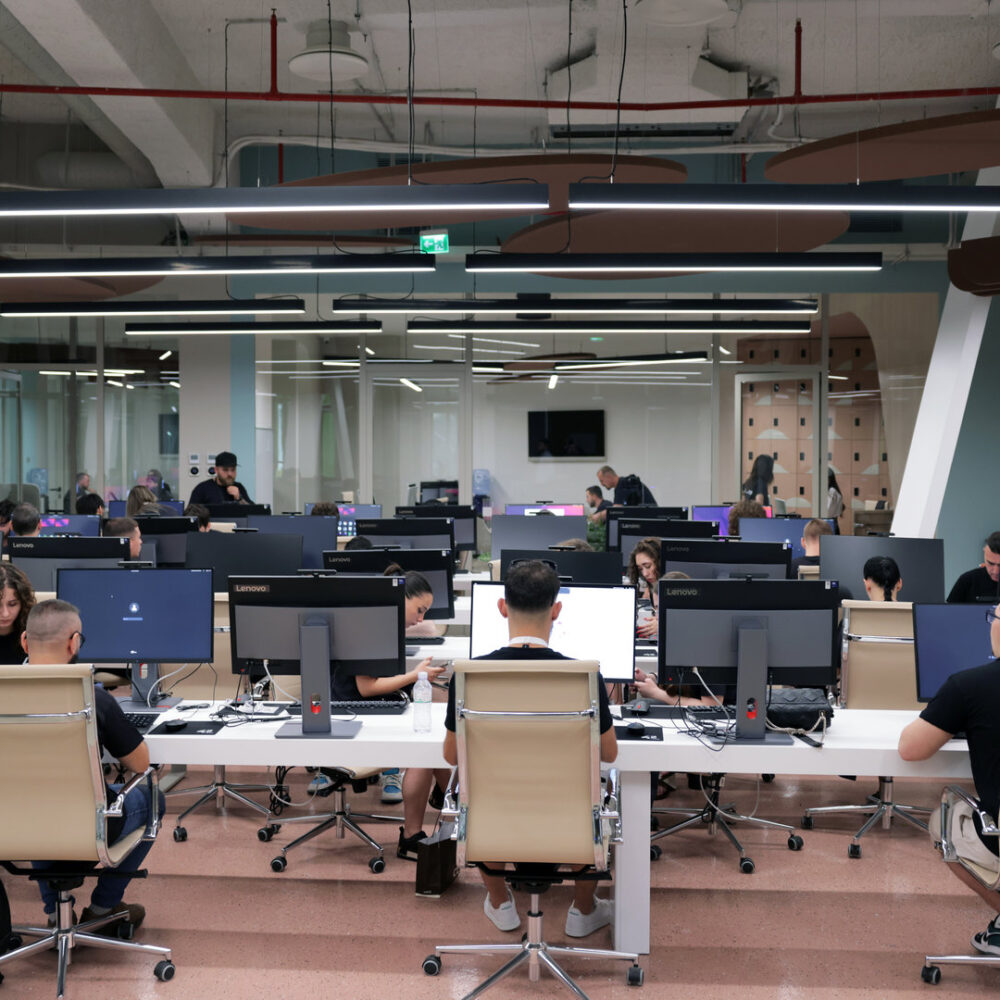
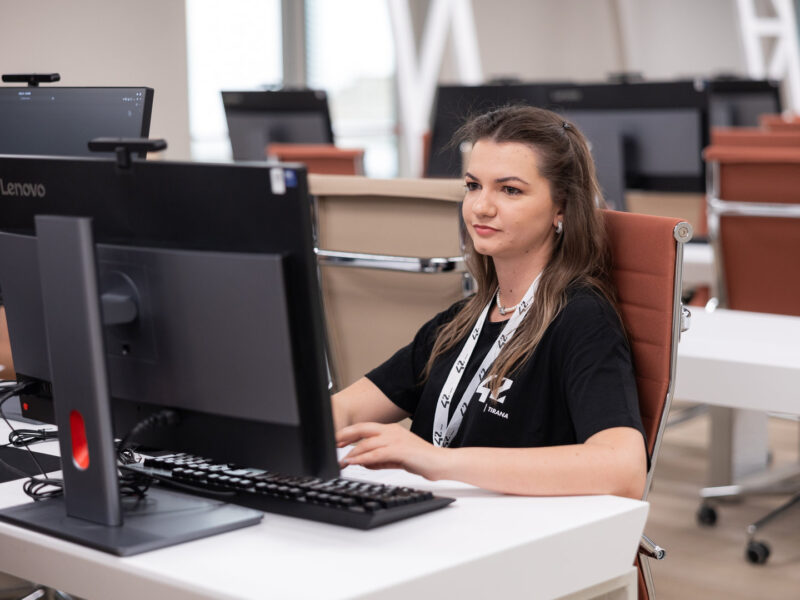
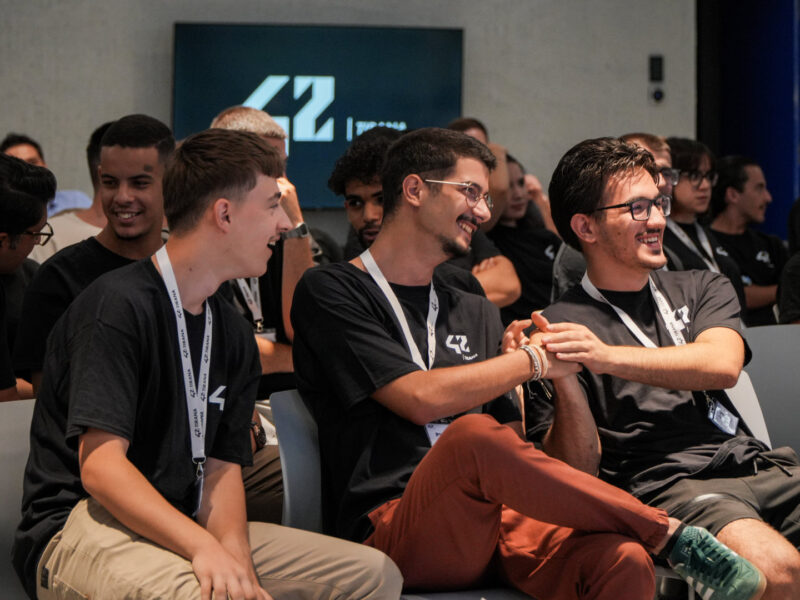
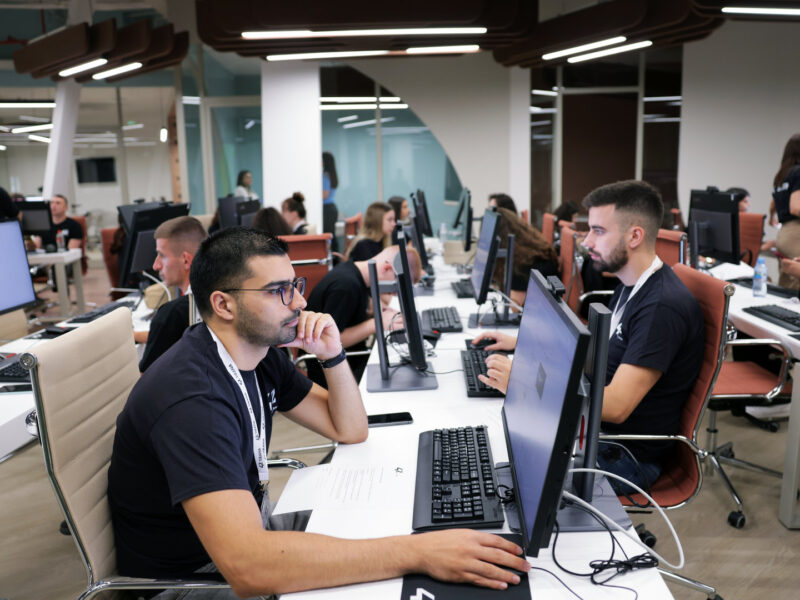
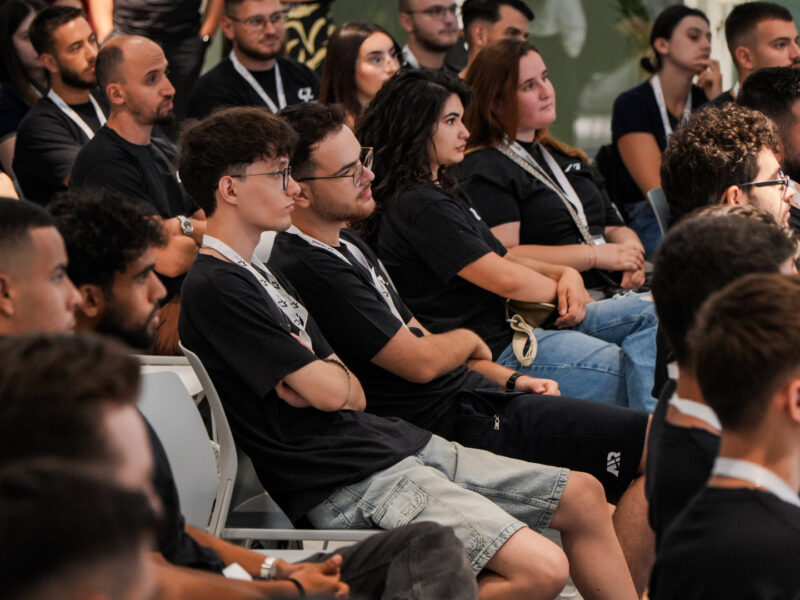
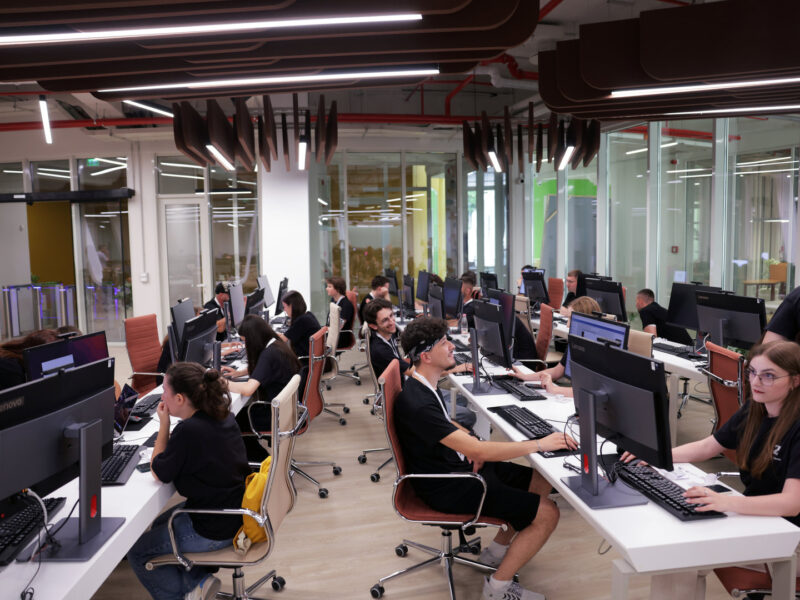
The first cohort of the 42 Tirana program will start in October 2025.
Thanks to its innovative teaching methods, 42 is able to offer education par excellence without resorting to lectures.
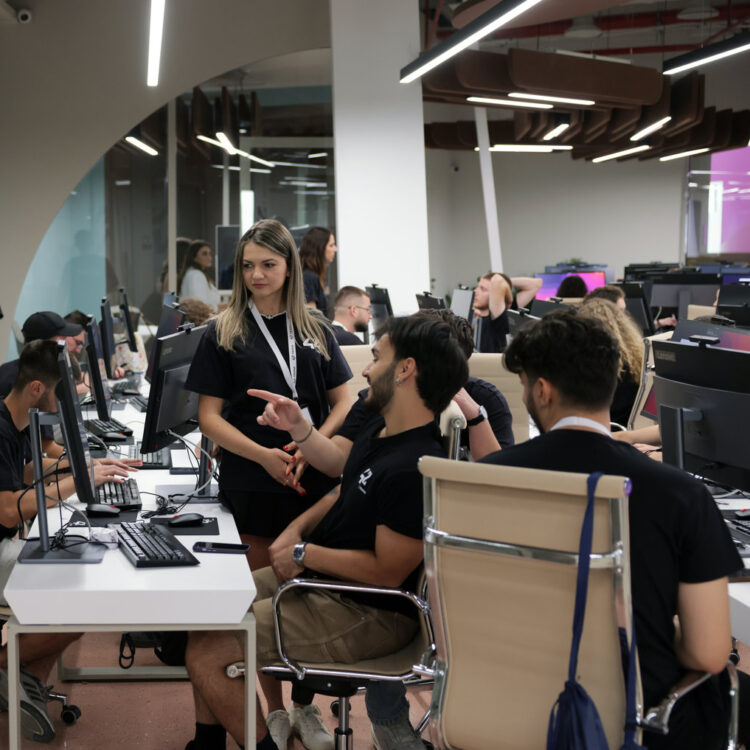
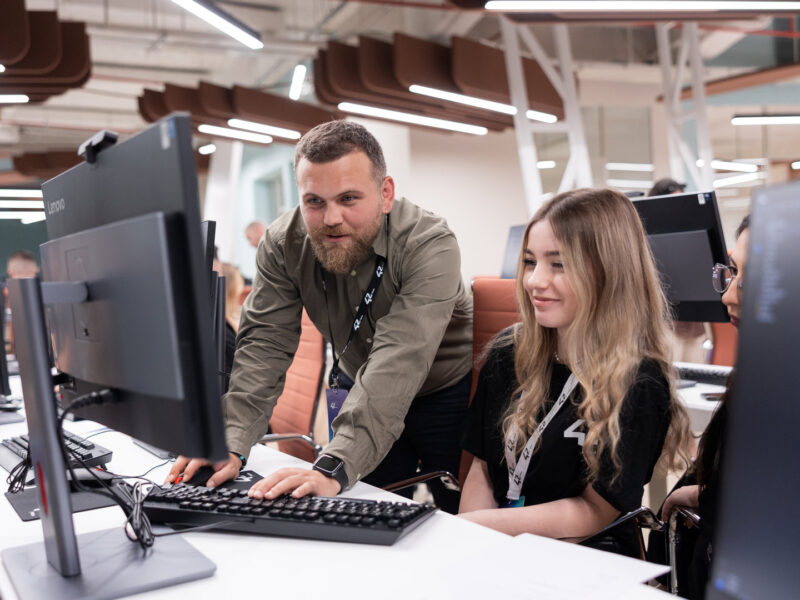
The pedagogical staff is available to help the students find their own solutions. In order to progress at 42, you have to work in groups, lean with the community to overcome challenges and then, share your experience with your peers. You don’t learn programming by copying algorithms on paper!
At 42, students act for their own success within a 100% practical curriculum.
Surpassing oneself is the only way to move forward: You can always count on the strength of the group; give and share information, as well as learn and train at the same time. This growing collective intelligence helps students understand how a professional environment works. Each part must rely on the other in order to properly achieve a project.
At 42, failing is not the end. It is a means to an end.
It’s the path to success: test a program, understand your mistakes, correct them and move forward. At 42, you are rewarded for finding your own solutions. This is not about mindlessly copying a model. Achievement is the only thing that matters, whichever path you use to reach it.
If you apply to 42, don’t expect a “knowledgeable” person to teach you anything.
You have to find the answers by yourself or ask fellow students to show you and explain things that you in turn will learn and transmit to someone else. This method allows you to move forward and sharpen your skills through research, experimentation and defending your personal approach to a given problem.
In classical learning, evaluation happens at the end of the curriculum. At 42, this is when you learn the most.
Peer evaluation requires students to evaluate each other’s work with the help of a grading scale established by the pedagogical staff. This system supports dialogue and allows sharing advice that will help students move forward and seek alternative methods. There is never one specific answer at 42. There is not one single model you must reproduce and learn by heart.
In a classroom, it’s usually ill-advised to join forces or share advice in order to solve a problem. At 42, it’s the other way around.
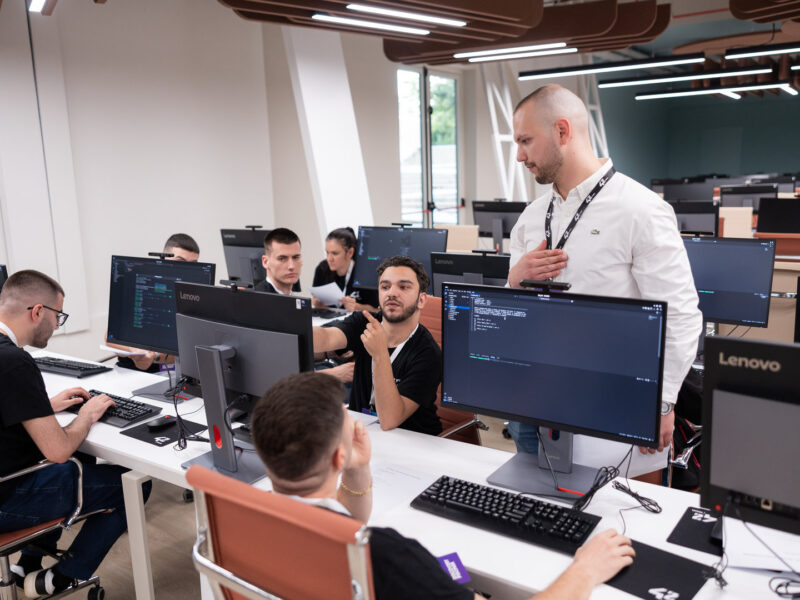
When projects get too tough to tackle, creating a group helps share different points of view. By approaching someone struggling with the same problem, you can share your thoughts and perspectives. Everyone brings something so that, together, you can understand and remember the keys to achieving a project.
The 42 method offers a motivational and entertaining environment, inspired by gaming, designed to make learning both engaging and rewarding.
Like in a video game, you can try, fail, and try again until you succeed. As you complete and validate activities, you earn Experience Points that reflect the skills you’ve mastered along the way. Progress and skills are displayed on your personal record in the Intranet as a snapshot of everything you’ve learned and achieved at 42.
Not everyone learns at the same pace: so why impose one? At 42, we don’t follow an administrative or academic timetable. On average, students integrate into the job market after 3 years. The curriculum is split into two parts: the common core and the second part, which is known as the specialisation part. The core curriculum must be completed in a maximum of two years. The second part may take longer, depending on your career plans. Most of the projects required have a realistic estimate of the time needed rather than an imposed deadline: personal organisation is essential.
The 42 program begins with the core curriculum. This experience helps students develop both strong technical skills and essential human qualities such as teamwork, problem-solving, communication, and independent learning. Lasting 6-24 months, the program adapts to each student’s pace and is built around hands-on projects that connect theory with real-world practice.Students solve technical problems by designing efficient algorithms and building secure, scalable software architectures using C, Python, and other programming languages. They explore network protocols, system administration, and cloud infrastructures with tools such as Docker. They also create dynamic web applications and AI-powered solutions, from chatbots to recommendation systems, while improving their work through peer collaboration.
The second part of the curriculum tackles classical digital and programming fields such as artificial intelligence, cyber security and mobile application development. It focuses on project group work and collaboration as well as neutrality towards brands, technologies and languages in order to develop the adaptation skills of our students and help them avoid the fatal obsolescence that strikes the digital market from time to time. Students are free to pick the domains they want to explore. This helps them diversify their skills and expertise. This part of the curriculum also includes internships and occasional projects with exclusive partners, other schools and even an entrepreneurial program. It’s up to the students to decide when they stop the curriculum to become Alumni.
Not everyone learns at the same pace: so why impose one? At 42 Tirana, we don’t follow an administrative or academic timetable. On average, students integrate into the job market after 3 years. The curriculum is split into two parts: the Common Core and the second part, which is known as the specialization part. The core curriculum must be completed in a maximum of two years. The second part may take longer, depending on your career plans. Most of the projects required have a realistic estimate of the time needed rather than an imposed deadline: personal organisation is essential.
The length of the Common Core adapts to students’ pace. The greater the time investment, the shorter it becomes. Milestones along the way provide an opportunity to assess progress, while the system updates each student’s estimated completion date based on their real progression. Students can finish in as little as six months, or take up to two years - allowing everyone to move at the speed that works best for them. .
To help students balance their studies with personal or unexpected circumstances, a flexible time-off option is available. Students may take up to a maximum of 30 days per year. These days can be used once earned, allowing students to rest, recharge, or manage personal commitments while continuing to progress through the program..
After completing the Common Core, students can advance in their training and, when ready, become Alumni. Alumni gain verifiable 42 credentials, connect with peers locally and globally, join exclusive events, and enjoy many more benefits.

The first cohort of the 42 Tirana program will start in October 2025.
The 2025 cohort registrations for 42 Tirana open in February and end in July. However, registrations for 2026 Piscines remain open.
“Piscine” is the French word for “swimming pool.” You will spend one month diving deep into our methods to find out whether 42 really is made for you or not.
We have two Spring Piscines planned for 2026, and applications are open.
| 1st Piscine: | February 2 – 27 |
| 2nd Piscine: | March 16 – April 10 |
The meetings are organized in the months preceding each Piscine. For 2026 Piscines, join weekly introduction meetings starting November 18 at 42 Tirana’s Auditorium (Yellow Pyramid’s Cube).